Navigating the Digital Age: Screen Time and Speech Development
As we navigate the parenting landscape in 2026, the question of screen time and speech development remains one of the most pressing concerns for families. If you've ever felt a pang of guilt while handing your toddler a tablet so you could finish a work call or prepare dinner, you are not alone. Technology is woven into the fabric of our daily lives, but as parents, we want to ensure that these digital tools are supporting, rather than hindering, our children's ability to communicate.
Understanding the relationship between screen time and speech development isn't about total abstinence from technology. Instead, it's about intentionality. In this guide, we'll explore the latest research, the difference between passive and active consumption, and how you can use specific tools—like the Tiny Talkers app—to turn screen time into a productive language-learning opportunity.
The Science Behind Screen Time and Speech Development
Research consistently shows that the quality of screen time matters just as much as the quantity. The first three years of life are a critical window for brain development, characterized by rapid neural pruning and the formation of language pathways. During this time, children learn best through human interaction—what experts call "serve and return" interactions.
When we discuss screen time and speech development, the primary concern is the "displacement effect." This occurs when digital media takes the place of activities that are known to foster language, such as playing with blocks, reading books, or engaging in face-to-face conversation. However, recent studies in 2025 and 2026 have highlighted that high-quality, interactive media can actually serve as a supplement to these traditional methods when used correctly.
Passive vs. Active Screen Time
To understand screen time and speech development, we must distinguish between two very different types of digital experiences:
- Passive Screen Time: This includes watching cartoons or YouTube videos where the child is a stationary observer. There is no requirement for the child to respond, vocalize, or interact. Excessive passive viewing is most frequently linked to delays in expressive language.
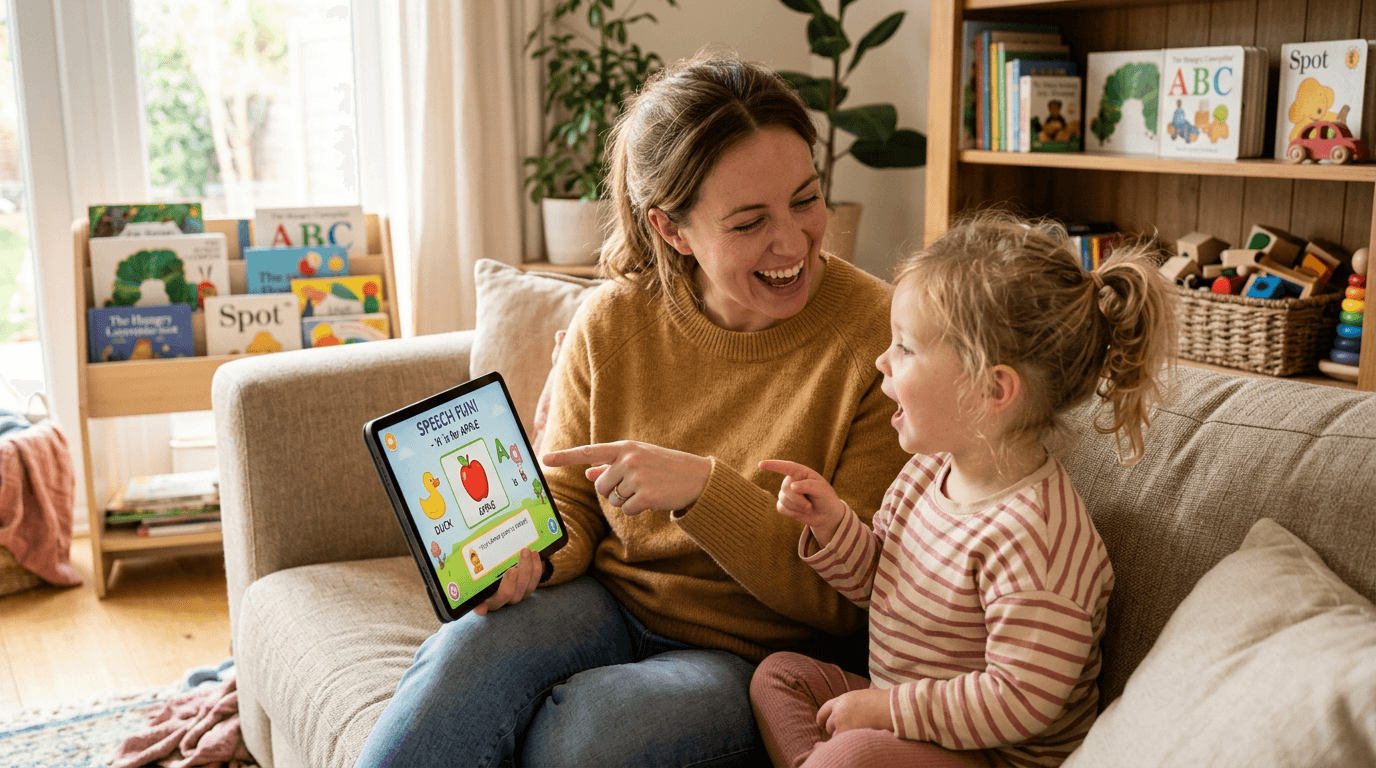
- Active/Interactive Screen Time: This involves apps and games that require input from the child. For example, the Tiny Talkers app for iOS uses a Pronunciation Coach and articulation activities that encourage children to speak back to the device, mimicking the natural flow of communication.
By shifting the focus from passive consumption to active engagement, parents can mitigate the potential negative impacts of screen time and speech development.
Current Guidelines for 2026
While technology evolves, the physiological needs of a developing child remain relatively constant. Leading pediatric organizations suggest the following framework for managing screen time and speech development:
For Infants (0—18 Months)
Avoid screen time other than video chatting with family. At this age, babies need the nuances of human facial expressions and the physical sensation of touch to build their communicative foundation. If you are looking for ways to boost development at this stage, consider reading our post on early language milestones.
For Toddlers (18—24 Months)
If you choose to introduce digital media, it should be high-quality and educational. This is the perfect time to introduce interactive tools. The Tiny Talkers app is specifically designed for this demographic, offering over 100 word categories that help build vocabulary through play. Always engage in "co-viewing"—sit with your child and talk about what they are seeing on the screen.
For Preschoolers (2—5 Years)
Limit screen time to one hour per day of high-quality programming. This is where the Tiny Talkers features like "Custom Stories" and "Alphabet Games" can be incredibly beneficial. These features allow children to see themselves as part of the narrative, which increases engagement and retention. You can find the app on the Google Play Store for Android.
How to Make Screen Time "Speech-Friendly"
If you are worried about screen time and speech development, you can take proactive steps to make your child's digital minutes more valuable:
- Narrate the Action: Treat the screen like a picture book. Ask questions like, "What color is the bird?" or "Can you make a sound like a cow?"
- Prioritize Two-Way Interaction: Choose apps that require the child to respond. The Tiny Talkers Pronunciation Coach is a prime example of technology that facilitates vocalization.
- Connect Digital to Real Life: If your child learns about "apples" in an app, go to the kitchen and show them a real apple. This bridges the gap between the 2D world and the 3D world.
- Set Physical Boundaries: Ensure that screen time doesn't interfere with sleep, exercise, or family mealtimes.
The Role of Tiny Talkers in Healthy Development
We created Tiny Talkers because we recognized that parents needed a bridge. Instead of fearing screen time and speech development, we wanted to harness the power of technology to support speech-language goals. Our app includes:
- Articulation Activities: Fun games that focus on specific sounds.
- 100+ Word Categories: Expanding vocabulary in a structured, engaging way.
- Custom Stories: Personalized content that makes learning feel like a treat.
Disclaimer: While our app is a powerful tool for language enrichment, please consult a speech-language pathologist for professional advice if you have significant concerns about your child's progress.
When to Seek Professional Help
It is important not to blame screen time and speech development challenges entirely on technology. Sometimes, a child may have an underlying speech delay or disorder that requires professional intervention. If your child is not meeting milestones, such as using single words by 15 months or combining two words by age two, reach out to an SLP. For more information, read our article on when to see a speech-language pathologist.
Healthy Alternatives to Screens
Balance is the key to managing screen time and speech development. Here are some screen-free activities that are proven to boost language:
- Sensory Bins: Fill a bin with rice or beans and hide small toys. Describe the textures and colors as your child finds them.
- Puppet Shows: This encourages role-playing and conversational turn-taking.
- Singing and Rhyming: Songs like "The Itsy Bitsy Spider" help children understand the rhythm and melody of language.
By mixing these traditional activities with intentional digital tools like Tiny Talkers, you create a rich linguistic environment for your child.
Conclusion
The relationship between screen time and speech development is complex, but it doesn't have to be a source of stress. By choosing high-quality, interactive content and remaining an active participant in your child's digital world, you can turn a tablet into a powerful learning companion. Remember, your voice is the most important sound your child hears. Use technology to spark conversation, not silence it.